


Pregnancy is a sensitive and complex process that precedes great joy.In addition to the unforgettable moments of happiness when you hear the beating of a little heart for the first time, find out the gender of the baby or feel his first kicks, pregnancy brings many changes to the body.These changes are not always positive and have at least something pleasant.Among these factors is varicose veins.
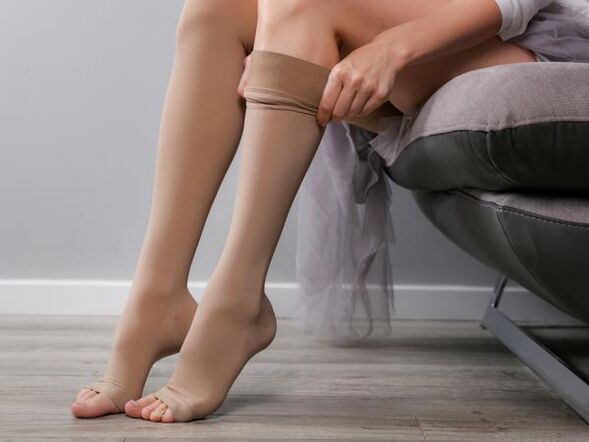
What are varicose veins
Varicose veins are dilation of veins that occur due to pathological changes in the walls and valves of blood vessels.Expansion can occur in various parts of the body, but the legs are most negatively affected.During pregnancy, varicose veins can form due to increased stress and hormonal changes.If you have already been exposed to this disease, pregnancy may worsen the situation.
Today, varicose veins are quite common and young.Every third woman suffers from it, and the average age of onset of the disease is 25 years.Varicose veins carry a hereditary trace.No, it is not inherited, but the possibility of a child developing the disease increases by 70% if mom or dad has varicose veins.
Causes of varicose veins during pregnancy
Varicose veins during pregnancy can occur for various reasons.Some of them cannot be foreseen, while others can be prevented, significantly reducing the risk of varicose veins.To fight ahead, it is important to know what to fight with.We have collected the most common causes of the disease:
- Sedentary lifestyle.Today, even without pregnancy, many people engage in sedentary work, which leads to a number of diseases, one of them is varicose veins.
- An increase in body weight also leads to the development of varicose veins.With strong weight gain (and rapid weight gain, which often happens during pregnancy), the load on the veins increases significantly.This leads to imbalance and disruption of the circulatory system.
- During pregnancy, increased blood viscosity is added to natural factors.Because of this, it is more difficult for it to pass through the venous channels, which leads to their deformation.
- “Stars” and capillary networks formed before pregnancy increase the risk of varicose veins during pregnancy.
- Hair removal with hot wax, high-heeled shoes, and prolonged exposure to the sun also contribute to the appearance of the disease.
Of course, a hereditary factor cannot be ruled out, however, by following simple safety rules, you can significantly reduce the risk of vein disease.
Particular attention should be paid to safety in the second half of pregnancy.During this period, a number of hormonal changes occur that increase the risk of developing the disease.No matter how you like it, change your heels to comfortable shoes, wax to more gentle hair removal methods, etc.
Symptoms
Varicose veins during pregnancy are complicated by the fact that in the first stages it is difficult to identify.The first symptoms can be confused with simple fatigue, a natural course of pregnancy.You can only find out if you are healthy in a doctor’s office, but there are a number of signs by which you can first determine the presence of the disease.
- At the first stage of the onset of pathology, it manifests itself as fatigue in the muscles when walking, and barely noticeable nets on the legs.Women cannot always trace the appearance of these symptoms and associate them with a possible disease.After all, who didn’t get tired while walking, even without being pregnant?
- In the second stage, the symptoms are more obvious.You may notice periodic cramps and pain in the evening, which are barely noticeable or absent in the morning.This all adds up to symptoms of pain and fatigue in the legs when walking for a long time.At this stage, you should be vigilant and contact a specialist.
- At the third stage of development of varicose veins, more obvious symptoms appear.This includes severe pain, nets, and cramps at night.The veins expand, which is visible visually.You will be able to easily see a pattern of blue veins in your legs (or other areas of inflammation of the disease).
The disease cannot be started.This is not only aesthetically unattractive and carries a whole range of uncomfortable symptoms, but can also cause the development of eczema.It is better to consult a doctor at the first symptoms, but even if it turns out that you have started the disease, it is never too late to start treatment.Next we will talk more about treatment methods, but we will say right away that varicose veins during pregnancy are not only possible, but also necessary.
During pregnancy, pathology develops not only in the legs, but also in other parts of the body.A woman is susceptible to inflammation in the labia and rectum.The first causes can develop into hemorrhoids and other concomitant diseases, even rupture of veins.
What are the dangers of varicose veins during pregnancy?
Any disease or deviation from the norm is unpleasant even outside of pregnancy.When a woman is pregnant, the risk of serious consequences increases and the symptoms become more severe.This is due to the fact that your body does not have the strength to fight concomitant diseases, because all its strength goes into creating and maintaining a new life.
Varicose veins are an unpleasant disease that can threaten pregnant women with serious consequences.But what exactly is dangerous about varicose veins during pregnancy?
- Due to the special condition of the body, the disease can progress much faster, especially if it is not dealt with in any way.
- With varicose veins, there is a risk of vein rupture and large blood loss.This may require hospitalization and surgery, which is extremely undesirable during pregnancy.
- The resulting hemorrhoids bring a lot of discomfort, and can get significantly worse during the birth itself.At its later stages, treatment is also carried out surgically.
- Pregnant women do not need additional pain and discomfort.The disease occurs with complications and associated symptoms.It is difficult to move, and the pain is severe.It is very difficult to combine this with the need for long walks in the fresh air.
- Varicose veins increase the risk of developing eczema at the site of inflammation.This is also an unpleasant disease that requires separate treatment.
Varicose veins during pregnancy can develop in various places.Next, we will look at the most common problems associated with varicose veins and provide prevention methods.This will help you maintain your health and nerves.
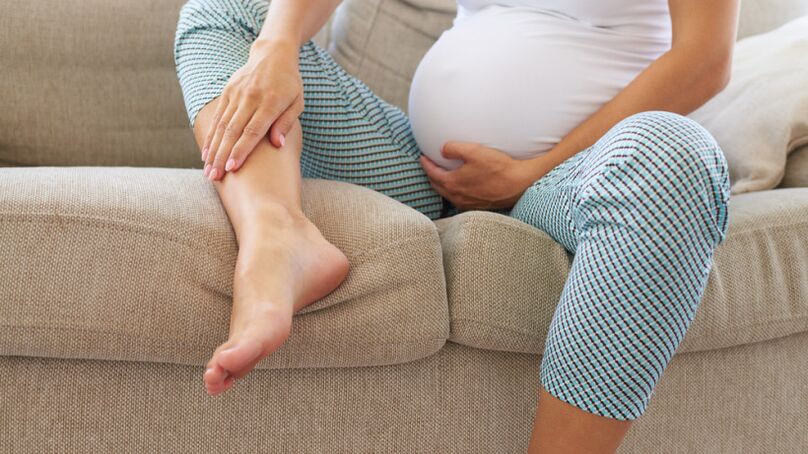
Varicose veins of the labia during pregnancy
A common disease for pregnant women is genital varicose veins during pregnancy, affecting the outer and inner labia.Every seventh woman in labor, to one degree or another, suffers from the disease.For some, it goes away on its own after childbirth, while others struggle with the consequences for a long time, even to the point of surgical intervention.
To the reasons for the occurrence of varicose veins during pregnancy, listed above, several more are added here.Let us immediately note that these reasons are beyond the control of a woman, and may arise due to the individual characteristics of the body:
- The main hormone produced during pregnancy, progesterone, can also lead to the development of varicose veins of the labia during pregnancy.With its excess, the walls of blood vessels lose their elasticity, which leads to the development of the disease.
- Some stages of bearing a child are accompanied by an increase in the volume of circulating blood in the pelvic area.This leads to increased stress on the walls of blood vessels and their expansion.
- From the first days of pregnancy, the baby grows inexorably.With its growth and development, which is certainly wonderful, the pressure on the vessels in the pelvis also increases.This, in turn, leads to a loss of strength and elasticity in the vessels.
If you cannot influence the characteristic causes, then identifying the disease in the early stages depends on you.Pay attention to some symptoms that will tell you whether you need to see a specialist urgently.
- Increase in size of the labia.Often this increase is noticeable and the gynecologist will note such changes, but if symptoms occur between visits to the doctor, it is worth reporting the problem yourself.
- You may observe swelling and blue discoloration of the veins.
- Discomfort and itching can also signal varicose veins.
- Darkening of the skin in the area.
- Characteristic pain during sexual intercourse and urination.
Although varicose veins of the labia during pregnancy have a chance to disappear on their own after childbirth, it is better not to risk it and begin timely treatment (if it was not possible to prevent the disease).
Varicose veins of the uterus during pregnancy
Another common type of vein enlargement pathology is varicose veins of the uterus during pregnancy.The uterus goes through difficult times during pregnancy.The baby puts constant pressure on it, which leads to the loss of elasticity in the veins, which causes varicose veins during pregnancy.But how to recognize varicose veins of the uterus?Let's look at the main symptoms:
- Aching pain in the lower abdomen, lower back and sacral region.
- Increased discharge, possibly mixed with blood.
Varicose veins of the uterus during pregnancy are dangerous for the health of the mother in labor.To diagnose it, the doctor may prescribe an ultrasound, perform laparoscopy, or use other methods to examine the uterine cavity.It is important to consult a specialist in a timely manner and not tolerate even the initial symptoms.
Prevention
Prevention of varicose veins in all its manifestations is an important part of responsible pregnancy management.Just a few simple rules will allow you to minimize the possibility of varicose veins.In addition, these tips are also useful for the prevention of other diseases, promote the proper development of the fetus and facilitate the birth process.
- Engage in moderate physical activity.During pregnancy, sport plays an important role, but it should be in measured portions and in the correct form.Do simple exercises at home, or sign up for yoga, stretching and other sports suitable for pregnant women.
- Introduce blood thinning foods into your diet.Among them are tomato juice, lemons, seafood.However, be careful.These products can cause allergies in the early stages.Do not consume them in large quantities.
- Wear only comfortable shoes.It should not put pressure on the leg and cause discomfort.The same goes for socks and stockings.The latter should be abandoned altogether; the former should be chosen with a free edge.
- Try to devote time to swimming and a contrast shower.This will help eliminate the possibility of developing vaginal varicose veins during pregnancy.
- Watch your diet.Constipation leads to the formation of hemorrhoids and varicose veins of the labia, so you should drink enough water, fresh vegetables, and juices.
- Try to sit only in a comfortable position, and never cross your legs.
- Purchase special clothing, including compression stockings.
Preventive methods can significantly reduce the risk of varicose veins during pregnancy.However, if you already have the first causes (not to mention the advanced stages of the disease), preventive methods alone are not enough.It is necessary to act and select a treatment method.
Treatment
During pregnancy, every disease becomes more complicated.Even a simple cold requires a special approach, not to mention varicose veins.It is important that the treatment is safe and comprehensively solves the problem.Often, outside of pregnancy, specialists prescribe an operation that can solve the problem in one session.However, during pregnancy this is an extreme measure that doctors practically do not resort to.So what to do?
- First of all, you should not self-medicate.One way or another, you go to the doctor for a routine examination, do not be lazy to tell about the problem that has arisen.
- Secondly, do not forget about the above methods of preventing the disease.Even if the disease has already overtaken you, adjusting your lifestyle and diet will help ease the symptoms and simplify the treatment process.
- Complete the prescribed treatment.Most often, doctors prescribe three methods for eliminating varicose veins, which are allowed during pregnancy.They are used at different stages.Among them:
- Endovasal laser coagulation.If the expansion has not reached 10 mm, the procedure will allow you to remove all signs, from external to internal, in 40 minutes.
- Foam sclerosis.If the expansion is more than 10 mm, foam sclerotherapy is prescribed.Up to 20 minutes of painless procedure, and 98% elimination of swelling, inflammation, nodes, and, accordingly, pain.
- Miniphlebectomy.The procedure lasts about an hour and allows you to remove extensions from 10 to 18 mm.
All these procedures have several factors in common, including painlessness, the absence of anesthesia (both local and general), and the absence of scars.The procedures also allow you to immediately begin performing normal tasks (without loads exceeding the norm for pregnant women).
These treatment methods are also used to treat varicose veins after pregnancy.The complex in the first trimester and 3rd trimester may differ.This is due to the developmental characteristics of the fetus and the effect of various medicinal components on it.

Varicose veins after pregnancy
Pregnancy can provoke the onset of the disease, but does not contribute to its treatment.If, while carrying a baby, varicose veins overtook the expectant mother, and it was not possible to solve the problem during pregnancy, it is necessary to undergo a course of treatment and eliminate varicose veins after pregnancy.
It is important to be observed by a phlebologist throughout your pregnancy.The doctor will be able to monitor the situation, prescribe medications and ointments to relieve symptoms, and prevent the disease from developing.
The operation after childbirth is also painless and is an effective method of influencing dilated veins.The procedure is completely safe and is a popular service all over the world.It allows you to cure varicose veins of the uterus during pregnancy, pathology that occurs in the labia area, on the legs and other parts of the body.
In addition, the doctor may prescribe ointments, wearing special stockings, and using medications.Often, specialists select a treatment that allows the mother to feed the baby.
Remedies for varicose veins
Treatment of varicose veins during pregnancy is focused on strengthening the walls of blood vessels and reducing blood viscosity.Thanks to this, inflammatory processes also pass and swelling is relieved.In the pharmacy you can find many effective drugs and ointments for the treatment of varicose veins during pregnancy, but they must be used exclusively under the supervision of a specialist, especially during pregnancy.
So, you are faced with pathology.Varicose veins appeared during pregnancy and you don’t know what to do?Among the most popular medicinal products today are:
- Medicinal group of phlebotonics.
- Anticoagulants.
- Angioprotectors.
- Antioxidants.
- Fibrinolytics.
The specialist prescribes tablets based on the clinical picture, as well as the individual characteristics of the body.As a rule, treatment consists of a combination of several groups of drugs, physical activity, a swimming pool and other measures.Only a comprehensive effect will help to effectively overcome the disease of the perineum and legs, without harming the baby’s health.
By taking care of yourself during pregnancy, you are also taking care of your baby.Help yourself manage your pregnancy, do not forget to visit your doctor and take your medications on time.